
How Do You Take Apart a Couch to Throw It Away?
Written by:
Full Time Movers Team
Published:
October 28, 2026
Learn how to take apart a couch to throw away safely, from removing legs and cushions to cutting the frame down for easier curbside or dump disposal.
You can take apart a couch to throw away by removing the legs, cushions, and any removable back panels first, then cutting or breaking down the frame into pieces small enough for your trash service or a dump drop-off to accept. Most couches come apart faster than people expect once the cushions and fabric are out of the way, though the frame underneath is usually the slower part of the job.
The right approach depends on how the couch was built, what your trash hauler or local facility will take, and how much time you want to spend on it. This breaks down what actually changes the process, what people get wrong, and how to get a couch down to curb-ready pieces without wrecking your back or your floors in the process.
What Changes How Hard a Couch Is to Take Apart?
The couch's frame material, whether it uses bolted or stapled joints, and how your trash service wants bulky items prepared all change how much work this is. A couch with exposed bolts under the cushions is far easier to break down than one that's stapled and glued together.
Before you start, flip the couch over and look underneath. Many sofas have a dust cover (a thin fabric sheet stapled to the bottom) hiding the frame joints. Pull or cut that off first. If you see bolts or screws at the leg brackets and where the arms meet the frame, you're dealing with a couch that was built to be assembled and can likely be reversed the same way. If instead you find staples, nails, and glued corner blocks, you'll be cutting through wood rather than unscrewing it.
Also check what your trash company or local transfer station actually requires. Some will take a couch whole if it's set out on the right collection day, others require it cut into pieces under a certain size, and some ask that upholstered furniture be wrapped in plastic. Calling ahead saves you from doing more cutting than necessary.
Removing Legs, Cushions, and Covers
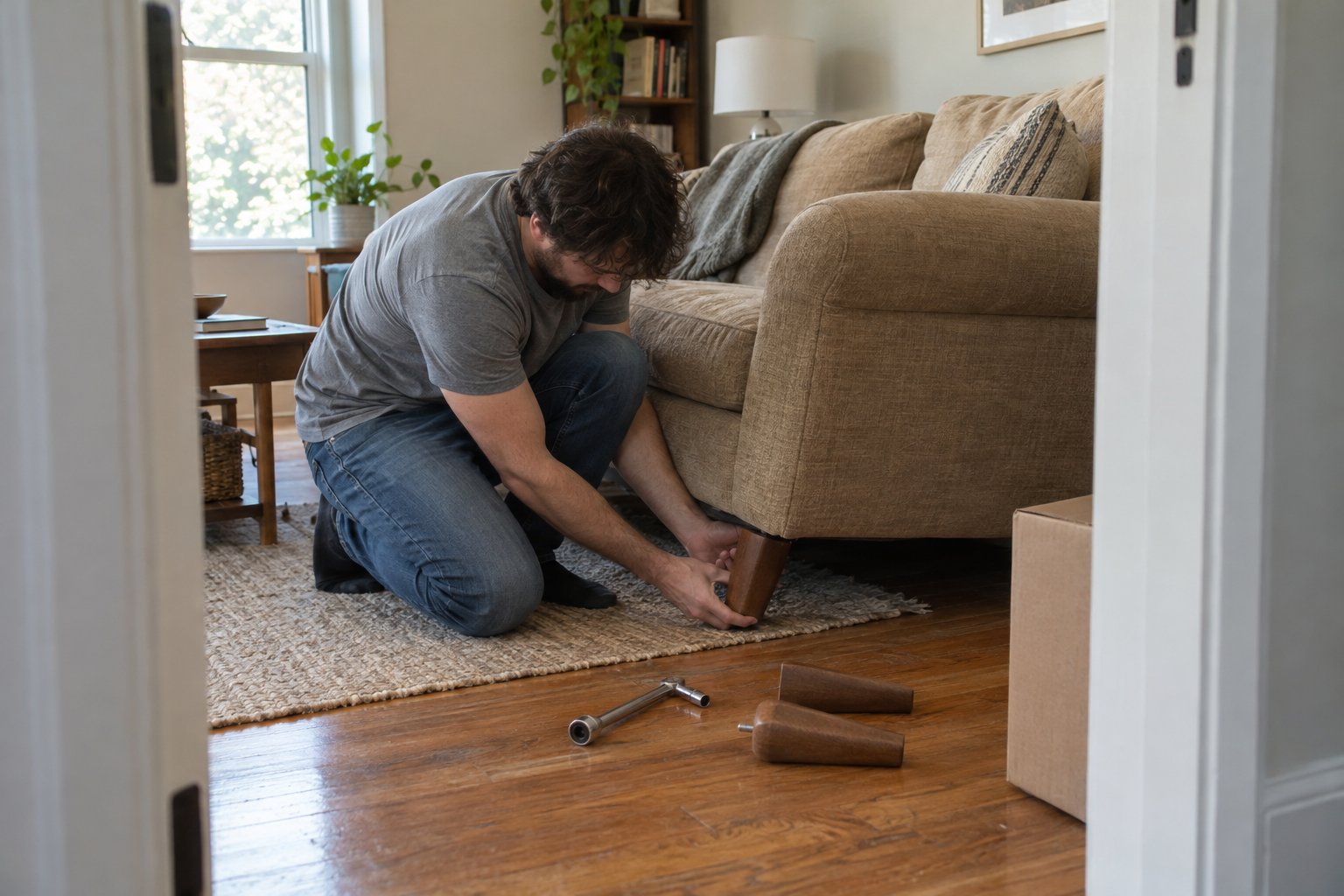
Start with everything that comes off without tools: cushions, pillows, and any slipcover. Then remove the legs, which are almost always either screwed into a bracket or threaded into a metal insert.
Set cushions aside, since they usually need to go out separately in heavy-duty bags because loose foam doesn't compact well in a regular trash bag. For the legs, a screwdriver or a wrench typically does it. If a leg won't turn, check whether it's actually glued in addition to screwed, which is common on older furniture.
With the legs and soft parts gone, you'll have a lighter, more manageable frame to work with, which matters once you get to the next step.
Removing the Back and Arms, If They Detach
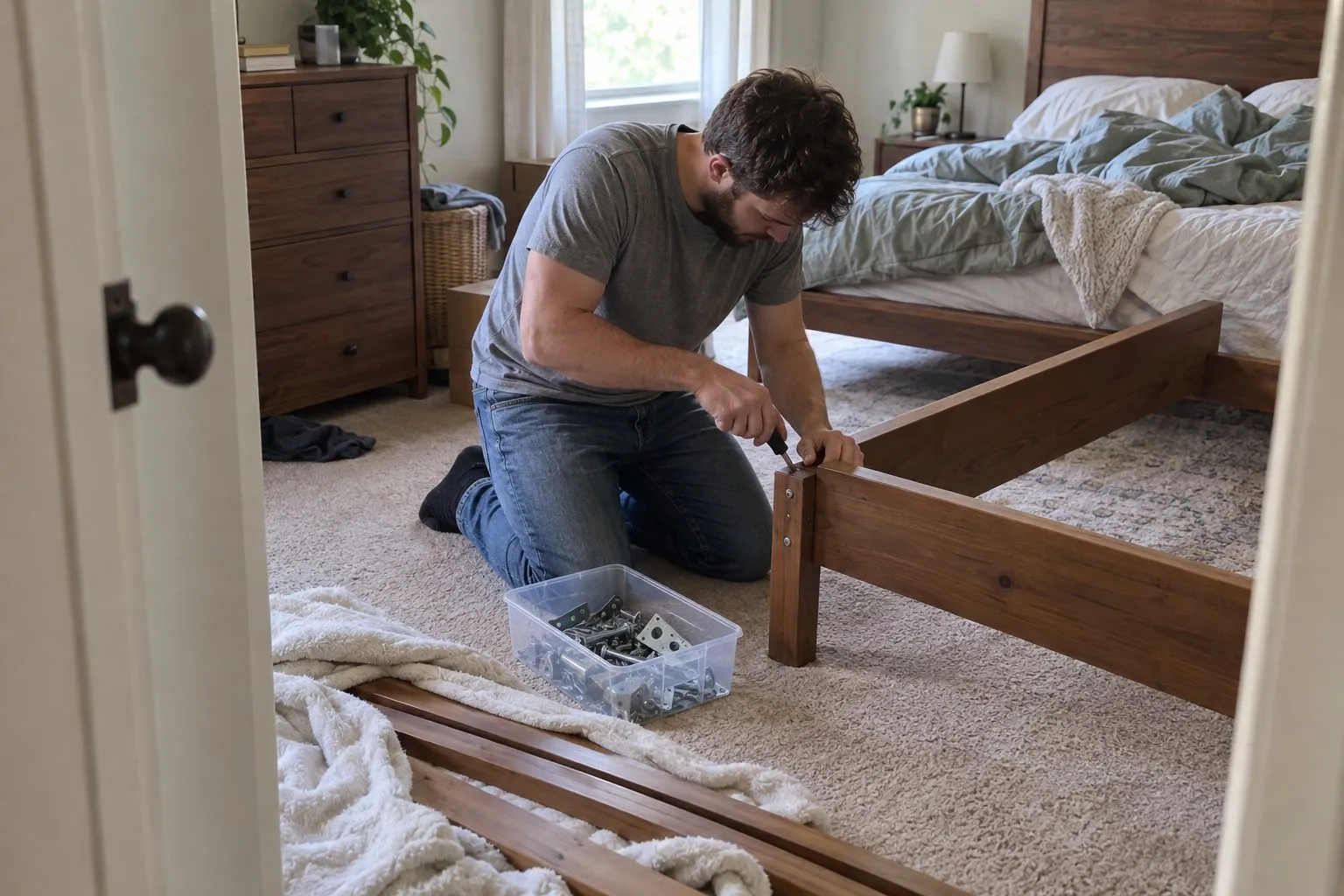
Some couches, especially ones that arrived flat-packed or were designed for easier moving, have a back panel and arms that bolt onto a base frame. If yours does, taking those connections apart first can turn one bulky piece into three or four smaller ones without any cutting at all. Look for access panels or fabric flaps that hide these bolts, usually along the underside or back edge.
Breaking Down the Frame Itself
If the frame is wood and held together with staples, nails, and glue rather than hardware, you'll generally need a reciprocating saw or a hand saw to cut it into sections. This is the step that actually determines whether the couch fits your trash service's size limits.
Work in a logical order: separate the arms from the seat base, then cut the seat base down into two or three sections along existing joints where the wood is thinner. Watch for springs. Many couches have coil or sinuous wire springs stapled or clipped to the frame, and these have tension even when the couch looks fully collapsed. Wear gloves and safety glasses, and cut slowly near any spring rather than forcing a section apart by hand.
A metal-frame couch, less common but not rare, usually needs to be taken apart at its welds or bolted joints rather than cut, since a saw won't get through metal tubing easily. If you run into a metal frame you can't separate with the tools on hand, that's a sign to treat it as a whole-item disposal rather than pushing through with the wrong tool.
One Misconception That Slows People Down
A lot of people assume a couch has to be reduced to flat pieces before it can be thrown away, the same way you might break down a cardboard box. That's rarely true. Most trash services only care that the piece is under a certain size and weight, not that every joint is separated. Cutting a couch into two or three large sections is often enough, and going further just adds unnecessary work.
As a rough rule of thumb, plan on an hour or so for a couch with bolted construction and legs you can unscrew, and closer to two hours if you're cutting through a stapled wood frame with a saw. Those numbers shift depending on the couch's size and condition, but they're a reasonable starting point for planning your day.
Disposal Options Once the Couch Is in Pieces
Once the couch is broken down, you generally have three paths: curbside bulk pickup, a drop-off at a transfer station or dump, or donation if any sections are still in good condition. Each has different rules about what condition or size the pieces need to be in.
If you're in Hoboken, Jersey City, or another building with strict waste rules, check with your building management or local sanitation department before setting anything at the curb, since bulky item pickup often runs on a separate schedule from regular trash. For broader guidance on getting rid of household items responsibly, the EPA's guidance on reducing, reusing and recycling household items is a useful reference for sorting what can be donated, recycled, or should go straight to disposal.
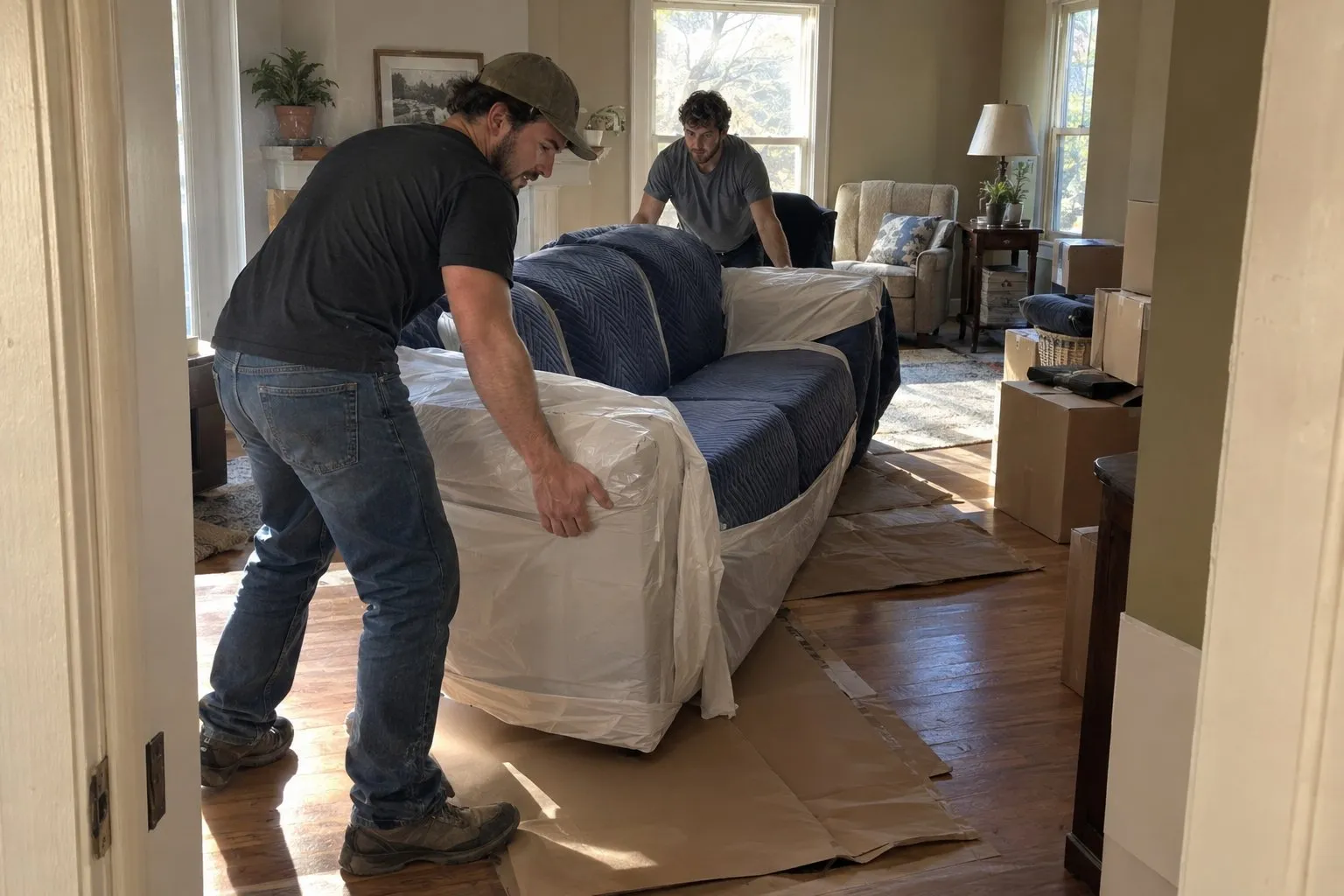
If you're moving rather than simply discarding a couch, the disassembly steps are similar but the goal is different, since you're trying to protect the piece instead of break it down for the trash.
When It Makes Sense to Skip the DIY Route
If the couch is especially large, heavy, or you'd rather not deal with hauling the pieces yourself, a junk removal service can take the whole piece without you needing to break it down at all. That's often the faster option when you're short on time or tools, or when the couch is in a location that makes cutting it apart impractical, like a small apartment with no outdoor space to work in.
Full Time Movers offers junk removal for old furniture, which is worth considering if you'd rather hand off a bulky couch than spend an afternoon disassembling it. And if you're clearing out a couch as part of a larger move, our guide on preparing furniture for a move and keeping hardware organized covers how to take pieces apart without losing the parts you'll need to put it back together.
Frequently Asked Questions
Planning your move? Request a quote from Full Time Movers.
Frequently Asked Questions
Do I need special tools to take apart a couch frame?
A screwdriver and wrench handle the legs and any bolted joints. For a stapled wood frame, a reciprocating saw or hand saw makes the work much faster. Gloves and safety glasses are worth having on hand once you get near springs or staples.
How do I know if a couch has springs I need to watch out for?
Flip the couch over and look at the underside through the dust cover. Coil springs or sinuous wire springs are usually visible or feel springy when pressed. These stay under tension even in an old couch, so cut carefully near them rather than prying by hand.
Can a couch be thrown away in one piece instead of taken apart?
Some trash services will collect a whole couch on a designated bulk pickup day, so it's worth checking local rules before cutting anything. If your hauler has a size limit, breaking the frame into two or three large sections is usually enough to meet it.
What should I do with couch cushions separately from the frame?
Cushions and loose foam generally need to go in heavy-duty bags since they don't compact the way a trash bag expects. Check whether your hauler wants upholstered pieces wrapped in plastic before pickup.
Is it worth donating parts of an old couch instead of throwing the whole thing away?
If the frame is sound and the fabric is in decent shape, some donation centers will take a couch as-is rather than in pieces, so it's worth checking before you start disassembling. Once it's cut apart, donation generally isn't an option anymore.

Ready for Your Next Move?
Moving within New Jersey or heading to another state? Full Time Movers handles residential, commercial, and long-distance moves from Jersey City and surrounding areas. Get in touch for a free moving quote.