
Can You Transport a Dryer on Its Back?
Written by:
Full Time Movers Team
Published:
November 2, 2026
Can you transport a dryer on its back? Here's why upright is the safer position, what changes the answer, and how to prepare one for moving day.
No, a dryer should not be transported on its back if it can be avoided. Dryers are built to operate and travel upright, and laying one on its back can shift internal components, strain the drum support, and in gas models, create a real risk of oil or residual gas affecting fittings that were never designed to seal in that orientation. If you have no other option for a short trip, there are ways to lower the risk, but upright is the position every manufacturer and mover assumes.
This question comes up constantly during moves, whether you're handling the appliance yourself or having it included as part of a larger large or specialty item move. Here's what actually changes the answer, and how to prepare a dryer properly either way.
What Changes Whether a Dryer Can Be Laid Down?
The biggest factor is fuel type. Electric dryers tolerate being laid on their side far better than gas dryers, because there's no fuel line or residual gas to worry about. Even then, "side" is different from "back": most manufacturers specifically warn against laying any dryer on its back or front, since that position puts weight directly on the drum bearing and the control panel, which aren't built to bear load that way.
Vehicle space is the other factor. A dryer laid flat, even on its side, takes up more floor area and makes it harder to secure other items around it. If your moving truck or portable container has the height to stand it upright and strap it in place, that's almost always the better use of space, not just the safer position for the appliance.
Is It Safe to Transport a Dryer on Its Back for a Short Distance?
For a very short trip, like moving a dryer from one room to a truck parked outside, laying it briefly on a padded dolly is sometimes unavoidable and generally low-risk if it's righted again quickly. What's not advisable is leaving a dryer on its back for an hours-long drive, where sustained pressure and road vibration have time to work on the drum mounts and any fittings. If a long trip is ahead, plan to keep it upright for that portion even if it was tipped briefly during loading.
One Common Misconception
A lot of people assume a dryer is "just a big empty box" since the drum looks hollow, so orientation shouldn't matter much. In reality, the drum is suspended on rollers or a belt system that expects gravity to pull in one direction. Laying the unit on its back shifts that load onto parts that aren't rated for it, and a dryer that worked fine before a move can develop a new rattle, a belt that slips, or a door that no longer seals evenly after arriving in the wrong position for too long.
How Do You Prepare a Dryer for Transport?
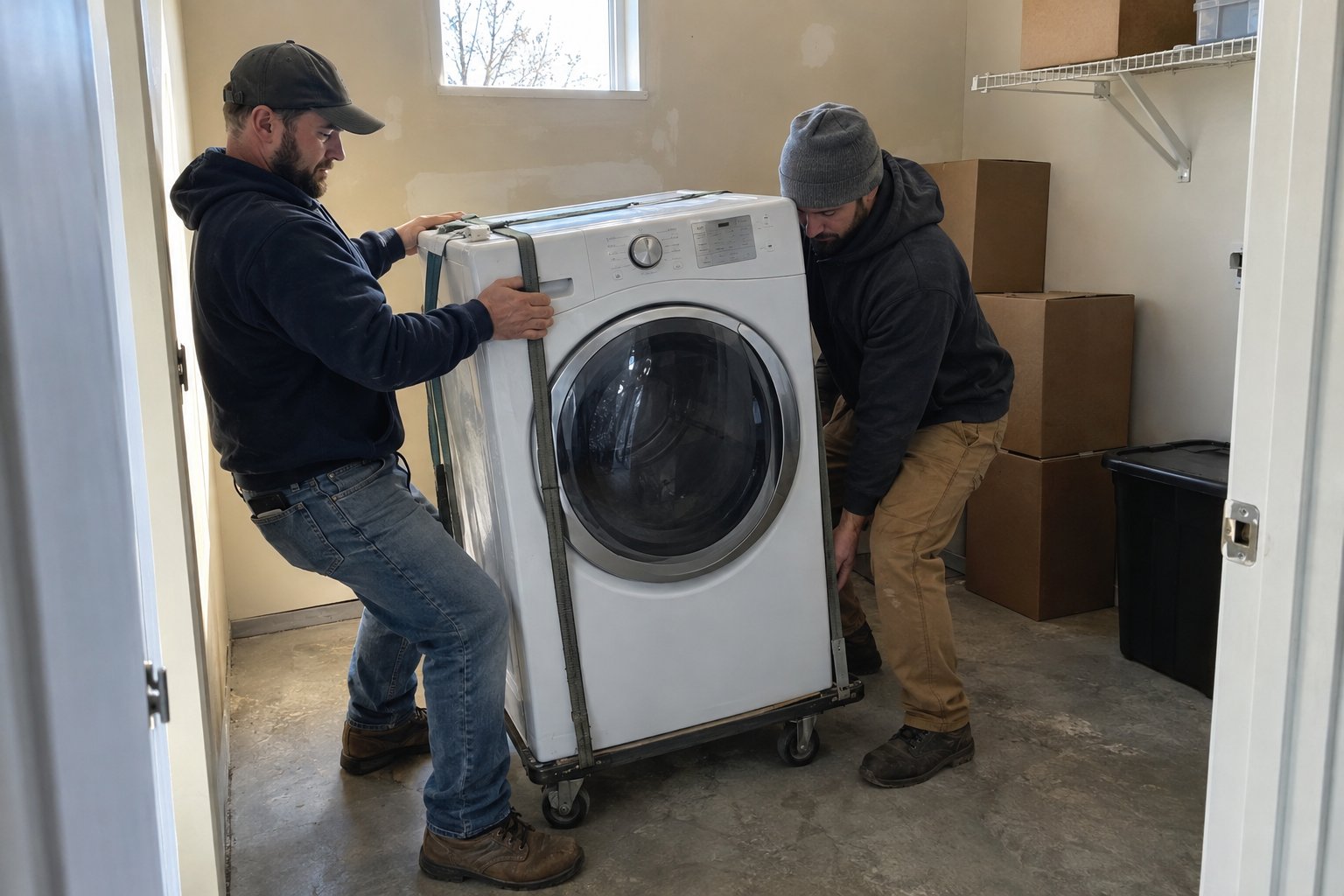
Preparing a dryer for a move starts with disconnecting it correctly, not with how you load it. For a gas dryer, shut off the gas supply valve and disconnect the line, then cap it, before anything else happens. For an electric dryer, unplug it and secure the cord so it doesn't drag or snag during loading. As a rule of thumb, give yourself about fifteen to twenty minutes to properly disconnect and prep a dryer before moving day, longer if the gas line needs a professional to detach it safely.
Once disconnected, a few more steps keep it stable in transit:
- Tape or zip-tie the door shut so it doesn't swing open and strain the hinge during loading or while on the truck.
- Secure the drum with a towel or padding inside so it doesn't bang against the housing if the unit tips slightly.
- Wrap the exterior in moving blankets, paying extra attention to the control panel and any exposed vents or knobs. The same wrapping habits that help with protecting furniture and floors when moving apply just as well to appliances.
- Keep it upright on an appliance dolly with straps, rather than sliding it flat into the truck.
What If the Dryer Won't Fit Upright?
If ceiling height or doorway clearance genuinely won't allow an upright dryer through, the next best option is laying it on its side, never its back, and only for the shortest possible distance. Pad the side that will bear weight, keep the door facing up if possible, and return it to upright as soon as you're clear of the tight spot. This is a compromise, not a recommended method, and it still carries more risk than keeping the dryer vertical the entire time.
If your move involves a narrow stairwell or a tight entryway anywhere from Hoboken to Jersey City, it's worth measuring doorways and stairwell turns before moving day so you know in advance whether the dryer can stay upright the whole way or needs a brief, careful tip on its side. A crew handling local moving in a tight building layout will usually ask about this ahead of time, but it helps to have the measurements ready.
Reconnecting a Dryer After the Move
Reconnection order matters as much as how it traveled. For gas dryers, have the line reconnected and leak-tested before running the unit, and don't skip a check for gas smell near the fitting. For either fuel type, let the dryer sit upright for a short while after it's set in place before running a full cycle, which gives any oil or lubricant that may have shifted during the move time to settle back into place.
If you're not confident disassembling, wrapping, or carrying an appliance like this on your own, it's reasonable to have help load and carry heavy items as part of the move rather than risk the dryer or your back. For a longer relocation where the dryer needs to travel hours rather than minutes, the same orientation rules still apply; the long-distance moving process just gives you more time to plan around them and fewer chances to quickly fix a problem mid-route.
Frequently Asked Questions
Planning your move? Request a quote from Full Time Movers.
Frequently Asked Questions
Does a gas dryer need to sit upright longer than an electric dryer after a move?
Gas dryers generally benefit from sitting upright a bit longer before their first cycle, since any residual oil in the burner assembly needs time to settle and the gas line connection needs to be checked for leaks before use. Electric dryers have fewer internal fluids to worry about, so they can typically be run sooner after reconnection.
Can a dryer be transported standing up without being strapped down?
It's not a good idea. Even upright, a dryer can tip or slide during sudden stops or turns if it isn't strapped to the truck wall or secured with an appliance dolly strap. Securing it takes only a few extra minutes and prevents it from shifting into other items.
What should movers know before loading a dryer on moving day?
Let the crew know whether the dryer is gas or electric, whether it's already disconnected, and if there are any tight stairwells or doorways along the path out. That information helps them decide how to carry it and whether it can stay upright the whole way.
How long should a dryer sit before being plugged back in after a move?
A short rest period upright, generally a couple of hours, is a reasonable rule of thumb before running the first cycle. This gives any shifted components or fluids time to resettle, especially if the dryer was tilted at any point during the move.
Is it normal for a dryer to make new noises after being moved?
A few new sounds right after a move aren't unusual, especially if the unit was tilted at some point, but a persistent rattle, squeal, or thumping that continues after a couple of cycles is worth having checked rather than ignored.



Ready for Your Next Move?
Moving within New Jersey or heading to another state? Full Time Movers handles residential, commercial, and long-distance moves from Jersey City and surrounding areas. Get in touch for a free moving quote.